


After Contact: Lives Changed in Lamb’s Archive

The encounters in Barbara Lamb’s archive did not end when the experience did; again and again, the people she worked with described coming back changed, with new priorities and a larger sense of what life holds.
Most accounts of contact stop at the encounter. Barbara Lamb’s work kept going past it. Over decades of regression sessions she heard what people carried home afterward, and she came to see those aftereffects as one of the most consistent parts of the whole phenomenon.
Some found ordinary life harder to bear for a while. Many came away with a sense of purpose they could not have predicted. And some simply described a quieter certainty that the world was larger than they had been taught.
This story follows those changes through Lamb’s own talks, a client’s 1989 session, and a December 2000 lecture by Harvard psychiatrist Dr. John E. Mack, who studied the same transformations. As always in The Experiencer Field, client identities are withheld.

So daily life sometimes for some of these people seems very, very boring and mundane compared to the uplift and the energy from those other experiences.
Hard to come back
For some, ordinary life felt smaller afterward.
In a 1994 lecture, Lamb described a side of contact that rarely makes the news: some of her clients missed it.
“I’ve had one person say that it was just the saddest thing for her that she had to be returned to Earth after some of her experiences. That she’d actually be depressed for days.”
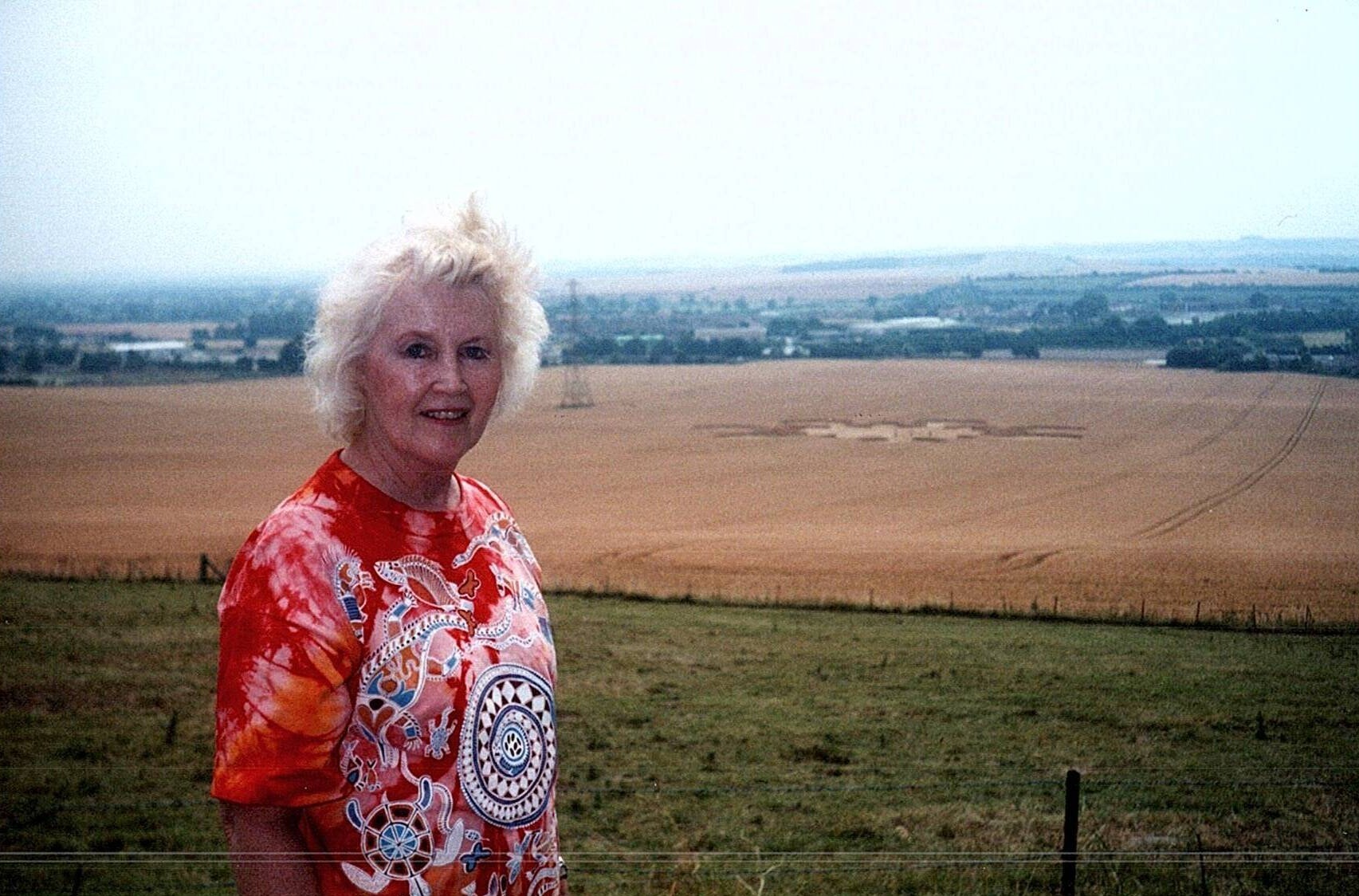
Barbara Lamb in England, August 1999. (Photo: Barbara Lamb Archive)
Lamb explained what that woman, and others like her, were comparing everyday life against.
“That particular person described that she always feels, with her ET, she feels this strong, unconditional love, more wonderful than anything she’d ever experienced. And that she felt total positive regard from these beings to her.”
Sources: Barbara Lamb lecture, case_id 301 (part A), segments 0 and 1, 1994.
More than get up, go to work
Even a single sighting could shift how a person saw their life.
Not every change was dramatic. In a 1989 session, Lamb guided a client back to a strange object the client had once seen in the sky. Under hypnosis, the client still could not say what it had been, and did not need to.
“I guess I feel privileged for being so close to it, even though I didn’t see much.”
What mattered, the client explained, was what the sighting confirmed.
“It would be a bummer to go through life and not know of other things, other possibilities.”
When Lamb asked what it confirmed, the answer was simple: “That there is more than get up, go to work, and live and die.” The client described the result as a kind of steadiness.
“And I guess I get a sense of peace or calmness or serenity out of that belief or knowing or whatever it could be.”
Sources: regression session, case_id 186 (part B), segments 51 to 53, 1989.
A sense of mission
Many came back believing they had work to do.
Lamb heard this so often that she made a point of saying it in public. In a radio interview, she described what regression kept revealing.
“And I’d like to mention also that sometimes people are discovering through their regressions that they keep meeting with the same beings again and again, here and there, throughout their lifetime, and that they seem to have a special mission to do that is inspired by and sort of overseen by these extraterrestrial beings.”
The missions, as her clients described them, were practical and outward-facing.
“So many people do feel that they have a special mission that they’re doing, and they might involve ecological concerns, healing, physical healing work, emotional healing work, helping huge groups of people to recover if there are big large scale disasters.”
Lamb encouraged experiencers to take that sense of purpose seriously, because of where it led.
“And so it’s very worthwhile, I think, for experiencers to learn what they are supposed to be doing out of this because there’s a lot of good work coming out of it.”
Sources: Barbara Lamb radio interview, case_id -1 (#259A), segment 23; Barbara Lamb lecture, case_id -1 (#313A), segment 9.
What John Mack saw
A Harvard psychiatrist found the same pattern.
Lamb was not alone in noticing it. In December 2000, Dr. John E. Mack, the Pulitzer Prize-winning Harvard psychiatrist who spent his last years studying experiencers, spoke to a Southern California audience, with Lamb on the program. He described the same arc she had seen in her office.
“People who have these experiences, when they work through the traumatic dimension of it, become profoundly concerned with the earth as a sacred environment, with the fate of the planet.”
Mack also named what troubled him most about how the culture treated these witnesses.
“We have thousands, if not millions, of reliable witnesses telling the truth, but dismissed by the culture for ideological worldview reasons. And that introduces a profound moral problem.”
Sources: John E. Mack lecture with Barbara Lamb, case_id -1 (#273A), segments 26 and 28, December 2000.
Why the changes matter
What contact leaves behind is part of the record too.
No archive can say what caused these changes. Whatever their source, they recur across decades of sessions, and they shape real lives. That matters for disclosure, because preparing for a post-contact world means understanding what contact has already done to the people who report it. And it matters to experiencers who come back changed and wonder whether anyone else has felt the same.
In a 2006 interview, Lamb looked ahead. She did not expect one dramatic public moment.
“I think that they are already coming to many people. This is a huge phenomenon of people all over the world having experiences with these other beings.”
What would help, she said, was honest conversation.
“I think the more that this subject is talked about in a rational, sensible way, the better it is, the more people get informed about this phenomenon.”
Sources: Barbara Lamb interview, case_id 277 (part A), segments 17 and 18, 2006.
The Experiencer Field
The Experiencer Field draws on the archive of regression therapist Barbara Lamb, who has conducted more than 5,000 sessions with people who report contact with non-human intelligence. Lamb entrusted the archive to New Paradigm Institute. Quotes are verbatim, and client identities are always withheld.
Related in the Learning Library
The Experiencer Field · Story 01
Are Alien Encounters Always Frightening? What Barbara Lamb’s Clients Found
The Experiencer Field · Story 02
Warnings About the Earth: What Barbara Lamb’s Clients Were Shown

