


Who Changed Their Mind About UFOs?

Some were paid to explain it away; others simply had no reason to look. Sixteen scientists, officers and investigators who changed their minds in public — quoted here on both sides of that change, in their own words.
Arguments from authority are cheap, and lists of impressive names who believe in UFOs are easy to assemble and easy to dismantle. This one is built to survive being checked.
Everyone here meets two tests. First, there is a documented record of what they thought before — either in their own words, or in the public facts of what they were assigned to do. Second, every quotation is verbatim, drawn from a source anyone can open: congressional testimony, a notarized affidavit, a peer-reviewed journal, a broadcast transcript, a book. Where someone’s prior position is documented but they never described it themselves, this page says so and cites the record instead of inventing a confession.
That standard excluded a number of famous names, including several who are routinely included on lists like this one. Some had no documented prior position at all. A few turn out to have moved in the opposite direction. Their absence is not an argument against them — it is the price of the standard.
Each name below opens to the evidence.

Ridicule is not a part of the scientific method and the public should not be taught that it is.
They were paid to explain it away
Each of these four came to the subject on someone else’s payroll, with a brief that assumed there would be nothing in it to find.
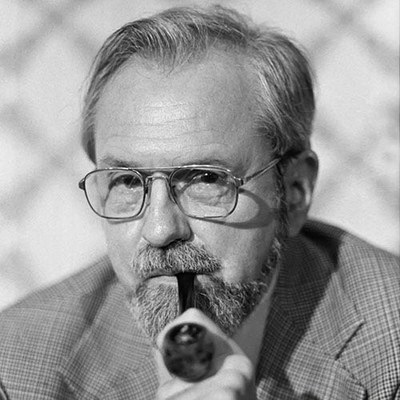
In 1948 the Air Force hired an Ohio State astronomer to review sighting reports and identify which ones had ordinary astronomical explanations. His job, in other words, was to make the problem go away. He was good at it, and he enjoyed it.
“Clearly, I, too, thought at the time that UFOs were just a lot of nonsense. I enjoyed the role of debunker even though I had to admit that some of the original 237 cases I studied were real puzzlers.”
Twenty-one years inside the Air Force’s own investigation changed that. By his account the turn was slow, and finished by the late 1960s.
“The transformation from skeptic to—no, not believer because that has certain ‘theological’ connotations—a scientist who felt he was on the track of an interesting phenomenon was gradual, but by the late ’60s it was complete.”
He refused the word believer every time it was offered to him.
Both quotations: J. Allen Hynek, The Hynek UFO Report (1977), ch. 1. The epigraph at the top of this page is from his “Unusual Aerial Phenomena,” Journal of the Optical Society of America 43:4, April 1953.
TRUE magazine sent a Marine Corps pilot to investigate the flying-saucer reports in 1949. His working assumptions were terrestrial: a Soviet missile, or a classified American program.
“As a pilot, I’d been skeptical of flying disks.”
He finished the assignment believing something else, and published it in 1950.
“I believe that the Air Force statements, contradictory as they appear, are part of an intricate program to prepare America—and the world—for the secret of the disks.”
Keyhoe changed his mind twice. By The Flying Saucer Conspiracy in 1955 he no longer thought the Air Force was preparing the public, but suppressing it.
Both quotations: Donald E. Keyhoe, The Flying Saucers Are Real (Fawcett, 1950), ch. 1.
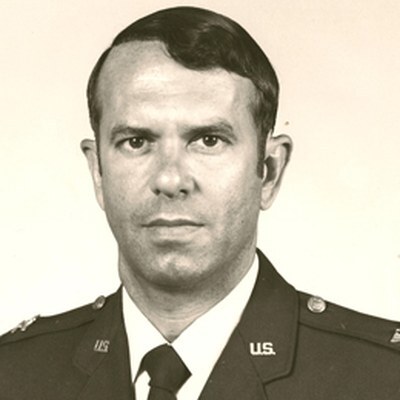
When airmen reported lights in Rendlesham Forest, the deputy base commander went out to put the story to rest.
“I was very much a sceptic and expected to find nothing.”
He did not put it to rest. Thirty years later he set his conclusion down in a sworn statement.
“I believe the objects that I saw at close quarter were extraterrestrial in origin and that the security services of both the United States and the United Kingdom have attempted—both then and now—to subvert the significance of what occurred at Rendlesham Forest and RAF Bentwaters by the use of well-practiced methods of disinformation.”
Halt was a lieutenant colonel at the time and retired a full colonel in 1991.
First quotation: East Anglian Daily Times (British spelling as printed). Second: notarized affidavit of Col. Charles I. Halt, 17 June 2010, paragraph 11.
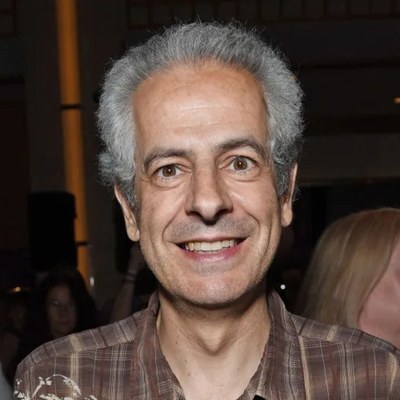
Between 1991 and 1994 Pope worked the Ministry of Defence desk responsible for assessing whether UFO reports carried any defence significance. He came to it, by his own account, without much regard for the subject.
“I knew little about the subject and was broadly skeptical, but always conducted my research and investigations in an open-minded way.”
He left with a different assessment, and spent the next thirty years arguing it publicly — while declining, throughout, to say what the phenomenon actually is.
“whatever the true nature of this phenomenon, it raises important defense, national security and air safety issues.”
Pope died on 6 April 2026.
Both quotations: nickpope.net.
They had no professional reason to look
Established careers somewhere else entirely, and no interest in the question — until something in the evidence made them look twice.
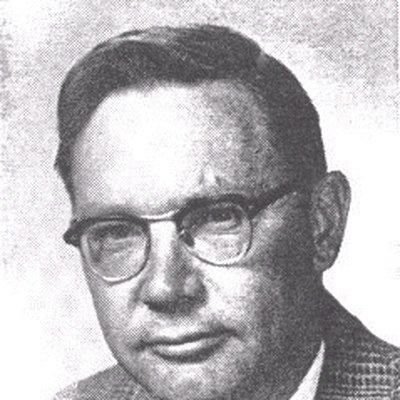
The best-documented conversion on this page, because all of it sits inside one government document: his prepared statement to the House Committee on Science and Astronautics. He opens by describing how little he had thought of the subject.
“I was aware of the work of non-official national investigative groups like NICAP … and APRO …; but lacking basis for detailed personal evaluation of their investigative methods, I simply did not take their publications very seriously.”
“I had no idea that the actual UFO situation is anything like what it really appears to be.”
Then two years of systematic work.
“About 2 years ago I became more than casually curious for several reasons that are not too relevant here, and began to spend much more time and very quickly changed my notions about the problem.”
And the conclusion he brought to Congress.
“I have become convinced that the scientific community, not only in this country but throughout the world, has been casually ignoring as nonsense a matter of extraordinary scientific importance.”
All four quotations: Statement on Unidentified Flying Objects, House Committee on Science and Astronautics, 29 July 1968.
Sturrock came to the question through Jacques Vallée, whom he had hired into his own astrophysics group at Stanford. Wanting to know what the evidence actually showed, he went to the government’s own study: the 1969 Condon Report, commissioned by the Air Force and widely understood to have closed the matter.
He read it and concluded it refuted itself.
“It is also my opinion that there is much in the Condon Report that could be used in support of the proposition that an analysis of the totality of UFO reports would show that a signal emerges from the noise.”
P. A. Sturrock, “An Analysis of the Condon Report on the Colorado UFO Project,” Journal of Scientific Exploration 1:1 (1987).
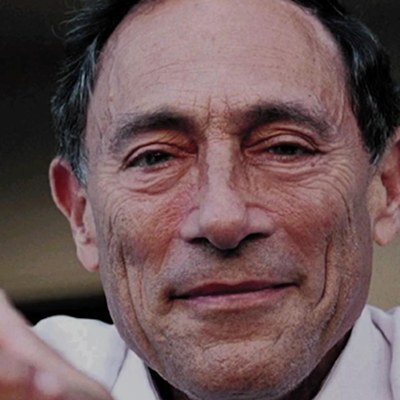
When a colleague suggested Mack meet a man who took accounts of alien encounters seriously, his reaction was clinical and dismissive.
“And my reaction to her was that he must be quite mad if he believes such stories, and he must be dealing with some contemporary sort of psychosis.”
He then spent years interviewing the people making the reports and screening them for psychopathology. Asked later whether he had become a believer, he refused the frame.
“It’s often said that I’m a believer, and sort of a gone—lost my objectivity. And I really object to that, because this is not about believing anything. I didn’t believe anything when I started, and I don’t really believe anything now. I’ve come to what I’ve come to, clinically. In other words, I worked with people over hundreds and hundreds of hours, and have done as careful a job as I could to listen, to sift out, to consider alternative explanations. And none have come forward.”
Harvard convened a committee to review his work. It raised methodological criticisms, the Dean took no action, and Mack remained a member in good standing of the faculty.
Both quotations: NOVA, “Kidnapped by UFOs?”, PBS, 1 April 1997.

Pasulka arrived sideways, through archival research on Catholic accounts of aerial phenomena. She had not been paying attention to the modern version at all.
“Rod, like you, I had never paid attention to UFOs either. I didn’t watch the ‘X-Files.’ I never saw Close Encounters of the Third Kind. I actually just saw that film last year and enjoyed it!”
What she found in the historical record, and in the scientists who later approached her, changed the shape of the question.
“… is a phenomenon that has been with us humans for a long time. As horrifying as this is for scholars to admit, it appears to be transhistorical. We might use different cultural frameworks to describe it, but there it is.”
Pasulka makes no claim about what the phenomenon is — only that it is real and old.
Both quotations: interview with Rod Dreher, The European Conservative, 2023.

Nolan’s one previous brush with the field was analyzing the Atacama skeleton, which he identified as human. The episode was enough to make him want out.
“There was enough drama around the Atacama skeleton that I had basically decided to forswear all continued involvement in this area.”
When people connected to government and aerospace asked him to examine brain imaging from personnel who had been near unidentified craft, his first assumption was that someone was joking.
“I thought it was a practical joke at the beginning.”
The scans first appeared to show damage. Nolan ruled that out—damage in that region would have been fatal—and found something else: an unusual density of neural connection between the head of the caudate and the putamen.
“Everybody has this connectivity region in general, but let’s say for the average person that the density level is 1x. Most of the people in the study had 5x to 10x and up to 15x, the normal density in this region.”
Asked at the SALT conference in May 2023 to put a probability on extraterrestrial life having visited Earth, he answered: “100 percent.”
First three quotations: VICE, 10 December 2021. The probability answer was given at SALT iConnections, New York, May 2023, and reported by Fox News.

Kean was a public radio producer and investigative reporter with no history on the subject when a colleague in France sent her a ninety-page study, unsolicited, in 1999. Her own account of taking it on is not one of enthusiasm.
“When I first took the subject on, I was really embarrassed. You go to a party and people ask you what you do, and when you say you’re a journalist you’re just hoping nobody asks you what subject you focus on.”
Eleven years of reporting produced a conclusion she stated carefully, and still states carefully.
“a solid, physical phenomenon that appears to be under intelligent control and is capable of speeds, maneuverability, and luminosity beyond current known technology”
Kean does not argue for the extraterrestrial hypothesis, and has distanced herself from the conclusion of the French study that first drew her in.
First quotation: Columbia Journalism Review, 31 October 2010. Second: Leslie Kean, UFOs: Generals, Pilots, and Government Officials Go on the Record (2010).
A plant physiologist who came to the question from Martian biology, and who testified alongside Hynek, McDonald and Carl Sagan at the same 1968 congressional symposium.
“And that was the first I had paid any attention to the UFO side of it all.”
“I’m convinced that they’re not easy to explain away.”
Salisbury is the most tentative voice here. He concluded only that the reports resist explanation, not that he knew what they were, and he later returned to plant physiology.
Both quotations: Sign Oral History Project interview, 7 August 2000.
It happened in front of them
They met the phenomenon through their own instruments, or through the people who did.
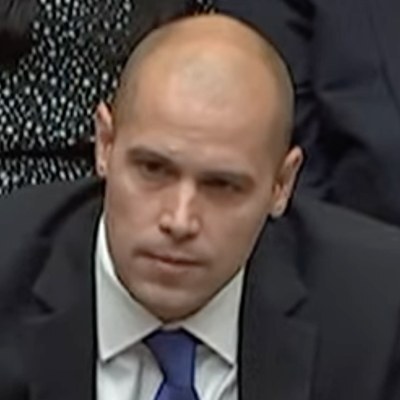
In 2014 Graves’s squadron installed a radar upgrade and began seeing objects that should not have been there. The squadron’s first explanation was the obvious one.
“At first, we assumed they were radar errors but soon we began to correlate the radar tracks with multiple onboard sensors, including infrared systems, eventually through visual ID.”
What he objects to now is not the mystery but the silence around it.
“I am worried, frankly. You know, if these were tactical jets from another country that were hangin’ out up there, it would be a massive issue. But because it looks slightly different, we’re not willing to actually look at the problem in the face.”
Graves makes no claim about origin.
First quotation: sworn testimony, House Oversight subcommittee, 26 July 2023. Second: 60 Minutes, CBS, 16 May 2021.
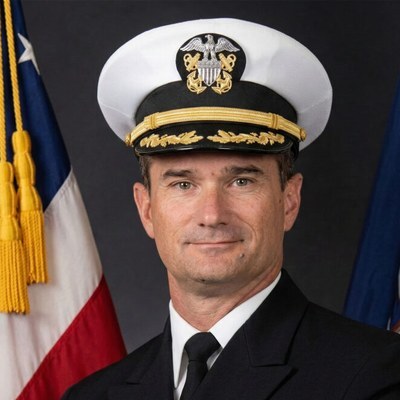
Fravor has never described himself as a former skeptic, and this page will not put the words in his mouth. What is documented is simpler: an eighteen-year F/A-18 pilot commanding a squadron, with no professional connection to the subject whatsoever, until he was vectored onto something off the coast of Baja California on 14 November 2004.
“I’m not crazy, haven’t been drinking. It was — after 18 years of flying, I’ve seen pretty much about everything that I can see in that realm, and this was nothing close.”
Nineteen years later he said the same thing under oath.
“The Tic Tac Object that we engaged in Nov 2004 was far superior to anything that we had at the time, have today, or are looking to develop in the next 10+ years.”
First quotation: ABC News, 18 December 2017. Second: written statement to the House Oversight Committee, 26 July 2023.
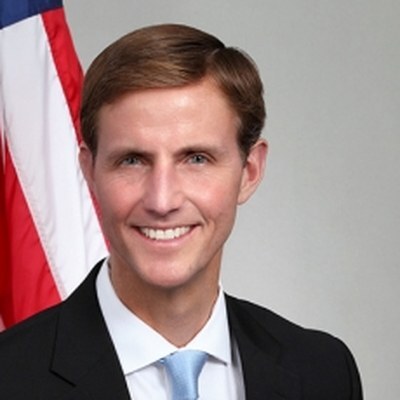
A career Navy oceanographer with no involvement in the subject until an email arrived on a Navy network with the subject line URGENT SAFETY OF FLIGHT ISSUE. It carried the video now known as Go Fast.
“Confirmation that UAPs are interacting with humanity came for me in January 2015 when I was serving as the Commander of the Naval Meteorology and Oceanography Command.”
Written testimony, House Committee on Oversight and Accountability, 13 November 2024.

Mellon spent a career at the top of the classified world—Deputy Assistant Secretary of Defense for Intelligence, and minority staff director of the Senate Select Committee on Intelligence—without ever engaging the subject. That changed after he left government.
“What is really motivating me right now, what really has accelerated and solidified my interest, is the [2004] USS Nimitz case—when I learned of that and began to talk to the military personnel involved.”
He is unusually precise about what he is and is not claiming.
“I did not claim the objects were alien. Merely real, intelligently controlled and not ours—hence the need to investigate further.”
First quotation: HISTORY, 21 May 2019; the bracketed date is the publication’s. Second: Issues in Science and Technology, April 2019.
Britain’s most senior officer read Charles Halt’s Rendlesham report and found the Ministry of Defence’s indifference to it indefensible. He put the dilemma to the Defence Secretary directly.
“If the [USAF] report … is accurate, there is evidence that British airspace and territory are vulnerable to unwarranted intrusion to a disturbing degree. If, on the other hand, [Halt’s report] must be dismissed, then we have evidence – no less disturbing, I suggest – that a sizeable number of USAF personnel at an important base in British territory are capable of serious misperception, the consequences of which might be grave in military terms.”
In the House of Lords he asked the question the record had not answered.
“My Lords, may I ask the noble Viscount whether or not it is true that all the sighting reports received by the Ministry of Defence before 1962 were destroyed because they were deemed ‘to be of no interest’? And if it is true, who was it who decided that they were of no interest?”
First quotation: letter to the Secretary of State for Defence, published by The National Archives (UK). Second: Hansard, House of Lords, 4 March 1982.
Related from the Learning Library
The Disinformation Series — how the subject was made unrespectable in the first place
The UAP Disclosure Timeline — the record these figures were reacting to
Full Disclosure Podcast — Daniel Sheehan on the law and policy of disclosure

